Six cultural parts. Each begins with visual exploration and three short-to-medium feature readings, then moves into open and closed retrieval practice and finishes with a 30-question competition bank.
How to use: read → look carefully at the images → retrieve facts without looking → complete the practice → finish with the Kuratorium Challenge.
London and the River ThamesEdinburgh CastleGiant's Causeway, Northern Ireland
READING 1
Four countries, one state
The United Kingdom is a sovereign state made up of England, Scotland, Wales and Northern Ireland. That simple sentence hides a surprisingly complicated identity. London is the capital of both England and the UK, while Edinburgh, Cardiff and Belfast are the capitals of Scotland, Wales and Northern Ireland. Each part has its own symbols, traditions and strong sense of identity. Scotland has its own legal and education systems, Wales has two official languages in public life, and Northern Ireland shares the island of Ireland with the Republic of Ireland. The Union Jack combines elements of several historic crosses. Knowing the difference between England, Great Britain and the United Kingdom is a classic culture question: Great Britain is the island containing England, Scotland and Wales; the United Kingdom also includes Northern Ireland.
Quick check
1. Write three facts you would expect to remember in a competition.
2. Which detail could easily become a TRUE/FALSE trap?
3. Explain one fact in your own words.
READING 2
Westminster: why one building matters
On the bank of the River Thames stands the Palace of Westminster, home of the UK Parliament. The famous clock tower is officially called Elizabeth Tower; Big Ben is the nickname of its largest bell, although people often use the name for the whole tower. Parliament has two chambers: the House of Commons and the House of Lords. The Prime Minister normally sits in the Commons, while the monarch is head of state. The UK is therefore a constitutional monarchy and a parliamentary democracy. Nearby are Westminster Abbey, where many coronations have taken place, and 10 Downing Street, the Prime Minister's official residence. A walk of less than a kilometre can therefore introduce a student to centuries of British political and royal history.
Quick check
1. Write three facts you would expect to remember in a competition.
2. Which detail could easily become a TRUE/FALSE trap?
3. Explain one fact in your own words.
READING 3
From Stonehenge to the Beatles
British culture is difficult to reduce to red buses and afternoon tea. Stonehenge was built in prehistoric times, long before England existed as a kingdom. William Shakespeare, born in Stratford-upon-Avon, transformed English drama in the late sixteenth and early seventeenth centuries. The Industrial Revolution changed British cities and helped make Britain a global industrial power. In the twentieth century, the Beatles emerged from Liverpool and became one of the most influential bands in popular music. Today British culture continues to travel through literature, film, television, music and sport. Football developed its modern rules in Britain, while Wimbledon is one of the world's oldest and most famous tennis tournaments.
Quick check
1. Write three facts you would expect to remember in a competition.
2. Which detail could easily become a TRUE/FALSE trap?
3. Explain one fact in your own words.
Fact radar
Before moving on, make sure you can connect each place, date, institution and symbol with the correct country. The questions below test only material introduced in this part.
Practice: closed + open questions
Immediate retrieval after the readings. Closed questions give instant feedback; open questions reveal a model answer.
1. What is the capital of Scotland?
2. What is the capital of Wales?
3. Which river flows through central London?
4. Which of these is NOT part of Great Britain?
5. What does the name Big Ben originally refer to?
6. Which two chambers make up the UK Parliament?
7. Which address is the official residence of the UK Prime Minister?
8. Where was William Shakespeare born?
9. Which site is prehistoric?
10. Which city is most closely associated with the Beatles?
11. Which famous tennis tournament is played in London?
12. What is the capital of Northern Ireland?
13. Explain one important geographical fact about this country.What should my answer include?
Use a precise place, capital, river, region or physical feature introduced above.
14. Choose one important date from the readings. What happened and why does it matter?What should my answer include?
State both the date and the event.
15. Describe one national symbol and explain what it represents.What should my answer include?
Name the symbol and connect it with the country.
16. Name one important institution mentioned in the readings and explain its role.What should my answer include?
Use the information from the reading rather than a one-word answer.
17. Which fact from the readings do you think is easiest to confuse in a competition? Explain the correct version.What should my answer include?
Identify the possible trap and correct it.
18. Choose one famous place from this section. Where is it and why is it significant?What should my answer include?
Give location plus significance.
19. Write two facts from this section that are connected with culture, literature, music or sport.What should my answer include?
Give two separate accurate facts.
20. Without looking back, write five facts you would want to remember before the competition.What should my answer include?
Check each fact against the readings when you finish.
KURATORIUM CHALLENGE
30-question country bank
Long end-of-part revision set. Factual precision, plausible distractors and mixed answer positions.
1. TRUE or FALSE: The United Kingdom consists of England, Scotland, Wales and Northern Ireland.
2. TRUE or FALSE: Edinburgh is the capital of Wales.
3. TRUE or FALSE: The River Thames flows through London.
4. TRUE or FALSE: Great Britain includes Northern Ireland.
5. TRUE or FALSE: Big Ben is the nickname of the largest bell in Elizabeth Tower.
6. TRUE or FALSE: The UK Parliament has two chambers.
7. TRUE or FALSE: The Prime Minister's official residence is at 10 Downing Street.
8. TRUE or FALSE: Shakespeare was born in Liverpool.
9. TRUE or FALSE: Stonehenge is a prehistoric monument.
10. TRUE or FALSE: The Beatles are strongly associated with Liverpool.
11. TRUE or FALSE: Wimbledon is a famous tennis tournament.
12. TRUE or FALSE: Belfast is the capital of Scotland.
13. What is the capital of Scotland?
14. What is the capital of Wales?
15. Which river flows through central London?
16. Which of these is NOT part of Great Britain?
17. What does the name Big Ben originally refer to?
18. Which two chambers make up the UK Parliament?
19. Which address is the official residence of the UK Prime Minister?
20. Where was William Shakespeare born?
21. Which site is prehistoric?
22. Which city is most closely associated with the Beatles?
23. Which famous tennis tournament is played in London?
24. What is the capital of Northern Ireland?
25. Write three geographical facts from this section.
26. Write two important historical facts, including at least one date.
27. Name two important places and explain why each matters.
28. Write one fact about government, institutions or national organisation.
29. Write two facts about culture, literature, music, traditions or sport.
30. Write a six-sentence mini-summary of this country using only facts you can defend.
Ireland is an island in the North Atlantic, but it contains two political entities. The Republic of Ireland is an independent state whose capital is Dublin. Northern Ireland is part of the United Kingdom and its capital is Belfast. This distinction matters enormously in history, politics and culture. The Republic uses the euro, while Northern Ireland uses the pound sterling. Irish and English are official languages in the Republic, although English is used by most people in everyday life. The island's landscape is famous for green countryside, a rugged Atlantic coast and dramatic places such as the Cliffs of Moher. Understanding the island begins with one essential rule: 'Ireland' can describe the island, while the Republic of Ireland and Northern Ireland are different political entities.
Quick check
1. Write three facts you would expect to remember in a competition.
2. Which detail could easily become a TRUE/FALSE trap?
3. Explain one fact in your own words.
READING 2
Dublin: books, bridges and a national story
Dublin grew around the River Liffey and today combines Georgian streets, modern technology companies and an extraordinary literary tradition. Writers connected with the city include James Joyce, Oscar Wilde, W. B. Yeats and Samuel Beckett. Trinity College Dublin houses the Book of Kells, an illuminated medieval manuscript created more than a thousand years ago. Irish history is also visible in the General Post Office on O'Connell Street, a key site of the 1916 Easter Rising. That rebellion did not immediately create an independent state, but it became a major turning point in the struggle for independence. Dublin therefore offers something useful for competition preparation: literature, history and geography often meet in the same place.
Quick check
1. Write three facts you would expect to remember in a competition.
2. Which detail could easily become a TRUE/FALSE trap?
3. Explain one fact in your own words.
READING 3
Saint Patrick, music and symbols
Saint Patrick's Day is celebrated on 17 March and has become an international symbol of Irish culture. Green clothes, parades and shamrocks are familiar images, but the shamrock has a traditional connection with Saint Patrick and the Christian Trinity. Ireland's official national emblem is actually the harp. Traditional Irish music often features instruments such as the fiddle, tin whistle and bodhrán. Gaelic games are another distinctive part of national culture. Gaelic football and hurling are organised by the Gaelic Athletic Association, founded in 1884. These sports are not simply entertainment: for many communities they are closely connected with local and national identity.
Quick check
1. Write three facts you would expect to remember in a competition.
2. Which detail could easily become a TRUE/FALSE trap?
3. Explain one fact in your own words.
Fact radar
Before moving on, make sure you can connect each place, date, institution and symbol with the correct country. The questions below test only material introduced in this part.
Practice: closed + open questions
Immediate retrieval after the readings. Closed questions give instant feedback; open questions reveal a model answer.
1. What is the capital of the Republic of Ireland?
2. Which political entity is part of the United Kingdom?
3. Which river runs through Dublin?
4. Which currency is used in the Republic of Ireland?
5. When is Saint Patrick's Day celebrated?
6. What is the official national emblem of Ireland?
7. Where can visitors see the Book of Kells?
8. Which event took place in Dublin in 1916?
9. What is Newgrange?
10. Which organisation governs Gaelic games such as hurling?
11. Which pair consists of traditional Gaelic sports?
12. What is the capital of Northern Ireland?
13. Explain one important geographical fact about this country.What should my answer include?
Use a precise place, capital, river, region or physical feature introduced above.
14. Choose one important date from the readings. What happened and why does it matter?What should my answer include?
State both the date and the event.
15. Describe one national symbol and explain what it represents.What should my answer include?
Name the symbol and connect it with the country.
16. Name one important institution mentioned in the readings and explain its role.What should my answer include?
Use the information from the reading rather than a one-word answer.
17. Which fact from the readings do you think is easiest to confuse in a competition? Explain the correct version.What should my answer include?
Identify the possible trap and correct it.
18. Choose one famous place from this section. Where is it and why is it significant?What should my answer include?
Give location plus significance.
19. Write two facts from this section that are connected with culture, literature, music or sport.What should my answer include?
Give two separate accurate facts.
20. Without looking back, write five facts you would want to remember before the competition.What should my answer include?
Check each fact against the readings when you finish.
KURATORIUM CHALLENGE
30-question country bank
Long end-of-part revision set. Factual precision, plausible distractors and mixed answer positions.
1. TRUE or FALSE: Dublin is the capital of the Republic of Ireland.
2. TRUE or FALSE: Northern Ireland is part of the Republic of Ireland.
3. TRUE or FALSE: The River Liffey flows through Dublin.
4. TRUE or FALSE: The Republic of Ireland uses the euro.
5. TRUE or FALSE: Saint Patrick's Day is celebrated on 17 March.
6. TRUE or FALSE: The shamrock is Ireland's official national emblem.
7. TRUE or FALSE: The Book of Kells is kept at Trinity College Dublin.
8. TRUE or FALSE: The Easter Rising took place in 1916.
9. TRUE or FALSE: Newgrange is a prehistoric passage tomb.
10. TRUE or FALSE: The Gaelic Athletic Association was founded in 1884.
11. TRUE or FALSE: Hurling is one of Ireland's traditional Gaelic sports.
12. TRUE or FALSE: Belfast is the capital of the Republic of Ireland.
13. What is the capital of the Republic of Ireland?
14. Which political entity is part of the United Kingdom?
15. Which river runs through Dublin?
16. Which currency is used in the Republic of Ireland?
17. When is Saint Patrick's Day celebrated?
18. What is the official national emblem of Ireland?
19. Where can visitors see the Book of Kells?
20. Which event took place in Dublin in 1916?
21. What is Newgrange?
22. Which organisation governs Gaelic games such as hurling?
23. Which pair consists of traditional Gaelic sports?
24. What is the capital of Northern Ireland?
25. Write three geographical facts from this section.
26. Write two important historical facts, including at least one date.
27. Name two important places and explain why each matters.
28. Write one fact about government, institutions or national organisation.
29. Write two facts about culture, literature, music, traditions or sport.
30. Write a six-sentence mini-summary of this country using only facts you can defend.
🇺🇸
PART 3 • KULTURA I REALIOZNAWSTWO
United States
Stany Zjednoczone • geography • history • institutions • traditions • culture
Statue of LibertyThe White HouseGrand Canyon
READING 1
Fifty states — and a capital that is not one of them
The United States is a federal republic of fifty states. Washington, D.C. is the national capital, but it is not a state. The largest state by area is Alaska, while California has the largest population. Two states, Alaska and Hawaii, are separated from the contiguous forty-eight states. The country stretches from the Atlantic to the Pacific and contains enormous geographical variety: the Rocky Mountains, the Great Plains, the Mississippi River system, deserts, forests and Arctic landscapes. The Grand Canyon in Arizona was carved mainly by the Colorado River. Geography questions often reward precision: New York City is the largest city, but it is not the capital; Washington, D.C. is.
Quick check
1. Write three facts you would expect to remember in a competition.
2. Which detail could easily become a TRUE/FALSE trap?
3. Explain one fact in your own words.
READING 2
A republic built around checks and balances
The US Constitution created a federal government divided into three branches. Congress makes federal laws and consists of the Senate and the House of Representatives. The President leads the executive branch. The Supreme Court is the highest court in the judicial branch. This separation of powers is linked to a system of checks and balances designed to prevent one branch from becoming too powerful. The President lives and works in the White House, while Congress meets in the US Capitol. The Declaration of Independence was adopted on 4 July 1776, a date now celebrated as Independence Day. The Constitution was written later, in 1787, and remains the foundation of the federal system.
Quick check
1. Write three facts you would expect to remember in a competition.
2. Which detail could easily become a TRUE/FALSE trap?
3. Explain one fact in your own words.
READING 3
A gift that became a symbol
The Statue of Liberty stands in New York Harbor. France gave the statue to the United States, and it was dedicated in 1886. Over time it became closely associated with immigration because millions of newcomers entered the country through nearby New York. Ellis Island later became the country's busiest immigrant inspection station. American culture has been shaped by many different communities and has travelled globally through cinema, jazz, rock, hip-hop, television and technology. Hollywood became shorthand for the film industry, while New Orleans is strongly associated with the development of jazz. Cultural questions often connect a place with an idea: New Orleans with jazz, Hollywood with film, and Silicon Valley with technology.
Quick check
1. Write three facts you would expect to remember in a competition.
2. Which detail could easily become a TRUE/FALSE trap?
3. Explain one fact in your own words.
Fact radar
Before moving on, make sure you can connect each place, date, institution and symbol with the correct country. The questions below test only material introduced in this part.
Practice: closed + open questions
Immediate retrieval after the readings. Closed questions give instant feedback; open questions reveal a model answer.
1. What is the capital of the United States?
2. How many states are there in the United States?
3. Which is the largest US state by area?
4. Which is the largest US city by population?
5. Which river played the main role in forming the Grand Canyon?
6. Which two chambers make up the US Congress?
7. Where does the US President live and work?
8. On which date is US Independence Day celebrated?
9. In which year was the Declaration of Independence adopted?
10. Which country gave the Statue of Liberty to the United States?
11. Which city is especially associated with the development of jazz?
12. Where does the US Congress meet?
13. Explain one important geographical fact about this country.What should my answer include?
Use a precise place, capital, river, region or physical feature introduced above.
14. Choose one important date from the readings. What happened and why does it matter?What should my answer include?
State both the date and the event.
15. Describe one national symbol and explain what it represents.What should my answer include?
Name the symbol and connect it with the country.
16. Name one important institution mentioned in the readings and explain its role.What should my answer include?
Use the information from the reading rather than a one-word answer.
17. Which fact from the readings do you think is easiest to confuse in a competition? Explain the correct version.What should my answer include?
Identify the possible trap and correct it.
18. Choose one famous place from this section. Where is it and why is it significant?What should my answer include?
Give location plus significance.
19. Write two facts from this section that are connected with culture, literature, music or sport.What should my answer include?
Give two separate accurate facts.
20. Without looking back, write five facts you would want to remember before the competition.What should my answer include?
Check each fact against the readings when you finish.
KURATORIUM CHALLENGE
30-question country bank
Long end-of-part revision set. Factual precision, plausible distractors and mixed answer positions.
1. TRUE or FALSE: The United States has 50 states.
2. TRUE or FALSE: Washington, D.C. is one of the 50 states.
3. TRUE or FALSE: Alaska is the largest US state by area.
4. TRUE or FALSE: New York City is the capital of the United States.
5. TRUE or FALSE: The Colorado River is associated with the formation of the Grand Canyon.
6. TRUE or FALSE: Congress consists of the Senate and the House of Representatives.
7. TRUE or FALSE: The US President lives and works in the White House.
8. TRUE or FALSE: The Declaration of Independence was adopted in 1776.
9. TRUE or FALSE: Independence Day is celebrated on 4 July.
10. TRUE or FALSE: France gave the Statue of Liberty to the United States.
11. TRUE or FALSE: New Orleans is strongly associated with the development of jazz.
12. TRUE or FALSE: The US Constitution was written before the Declaration of Independence.
13. What is the capital of the United States?
14. How many states are there in the United States?
15. Which is the largest US state by area?
16. Which is the largest US city by population?
17. Which river played the main role in forming the Grand Canyon?
18. Which two chambers make up the US Congress?
19. Where does the US President live and work?
20. On which date is US Independence Day celebrated?
21. In which year was the Declaration of Independence adopted?
22. Which country gave the Statue of Liberty to the United States?
23. Which city is especially associated with the development of jazz?
24. Where does the US Congress meet?
25. Write three geographical facts from this section.
26. Write two important historical facts, including at least one date.
27. Name two important places and explain why each matters.
28. Write one fact about government, institutions or national organisation.
29. Write two facts about culture, literature, music, traditions or sport.
30. Write a six-sentence mini-summary of this country using only facts you can defend.
🇨🇦
PART 4 • KULTURA I REALIOZNAWSTWO
Canada
Kanada • geography • history • institutions • traditions • culture
Parliament Hill, OttawaCanadian RockiesNiagara Falls
READING 1
The country with six time zones
Canada is the world's second-largest country by total area. It reaches from the Atlantic Ocean to the Pacific and north into the Arctic. Its capital is Ottawa, not Toronto or Vancouver. Canada has ten provinces and three territories. Ontario is the most populous province, while Quebec is the largest province by area. English and French are the country's two official languages at federal level. The Canadian landscape includes the Rocky Mountains, huge forests, countless lakes and part of Niagara Falls. Because the country is so wide, it spans six primary time zones. Geography is central to Canadian identity, but so is the challenge of connecting communities separated by enormous distances.
Quick check
1. Write three facts you would expect to remember in a competition.
2. Which detail could easily become a TRUE/FALSE trap?
3. Explain one fact in your own words.
READING 2
Why Canada has a monarch and a prime minister
Canada is a constitutional monarchy and a parliamentary democracy. The British monarch is also King of Canada and is represented federally by the Governor General. Political power in everyday government is exercised by elected representatives, with the Prime Minister leading the government. Parliament sits in Ottawa and consists of the Crown, the Senate and the House of Commons. Canada became a federation in 1867 through Confederation, although its constitutional independence developed gradually. The maple leaf, which appears on the national flag adopted in 1965, has become one of the country's best-known symbols.
Quick check
1. Write three facts you would expect to remember in a competition.
2. Which detail could easily become a TRUE/FALSE trap?
3. Explain one fact in your own words.
READING 3
Hockey, maple syrup and much more
Ice hockey is deeply associated with Canada, but Canadian culture cannot be reduced to one sport. Lacrosse is officially recognised as the national summer sport, while ice hockey is the national winter sport. Indigenous peoples — First Nations, Inuit and Métis — have histories and cultures that long predate European settlement and remain essential to understanding modern Canada. Quebec has a strong French-speaking identity, especially visible in Montreal and Quebec City. Canada is also known for writers, musicians, film-makers and scientific achievements. The everyday image of Canada may include maple syrup and snow, but competition questions are more likely to reward students who can connect symbols with political, linguistic and geographical facts.
Quick check
1. Write three facts you would expect to remember in a competition.
2. Which detail could easily become a TRUE/FALSE trap?
3. Explain one fact in your own words.
Fact radar
Before moving on, make sure you can connect each place, date, institution and symbol with the correct country. The questions below test only material introduced in this part.
Practice: closed + open questions
Immediate retrieval after the readings. Closed questions give instant feedback; open questions reveal a model answer.
1. What is the capital of Canada?
2. How many provinces does Canada have?
3. How many territories does Canada have?
4. Which are Canada's two official languages at federal level?
5. Which province is the largest by area?
6. Which province has the largest population?
7. In which year did Canadian Confederation take place?
8. Which symbol appears prominently on Canada's flag?
9. What is Canada's national winter sport?
10. What is Canada's national summer sport?
11. Who represents the monarch at federal level in Canada?
12. Which three Indigenous groupings are recognised in Canada's Constitution?
13. Explain one important geographical fact about this country.What should my answer include?
Use a precise place, capital, river, region or physical feature introduced above.
14. Choose one important date from the readings. What happened and why does it matter?What should my answer include?
State both the date and the event.
15. Describe one national symbol and explain what it represents.What should my answer include?
Name the symbol and connect it with the country.
16. Name one important institution mentioned in the readings and explain its role.What should my answer include?
Use the information from the reading rather than a one-word answer.
17. Which fact from the readings do you think is easiest to confuse in a competition? Explain the correct version.What should my answer include?
Identify the possible trap and correct it.
18. Choose one famous place from this section. Where is it and why is it significant?What should my answer include?
Give location plus significance.
19. Write two facts from this section that are connected with culture, literature, music or sport.What should my answer include?
Give two separate accurate facts.
20. Without looking back, write five facts you would want to remember before the competition.What should my answer include?
Check each fact against the readings when you finish.
KURATORIUM CHALLENGE
30-question country bank
Long end-of-part revision set. Factual precision, plausible distractors and mixed answer positions.
1. TRUE or FALSE: Ottawa is the capital of Canada.
2. TRUE or FALSE: Canada has ten provinces.
3. TRUE or FALSE: Canada has three territories.
4. TRUE or FALSE: English and French are Canada's two official languages at federal level.
5. TRUE or FALSE: Toronto is the capital of Canada.
6. TRUE or FALSE: Canada became a federation in 1867.
7. TRUE or FALSE: A maple leaf appears on Canada's national flag.
8. TRUE or FALSE: Ice hockey is Canada's national winter sport.
9. TRUE or FALSE: Lacrosse is Canada's national summer sport.
10. TRUE or FALSE: The monarch is represented federally by the Governor General.
11. TRUE or FALSE: Quebec is Canada's most populous province.
12. TRUE or FALSE: Canada is smaller in total area than every other country in the world.
13. What is the capital of Canada?
14. How many provinces does Canada have?
15. How many territories does Canada have?
16. Which are Canada's two official languages at federal level?
17. Which province is the largest by area?
18. Which province has the largest population?
19. In which year did Canadian Confederation take place?
20. Which symbol appears prominently on Canada's flag?
21. What is Canada's national winter sport?
22. What is Canada's national summer sport?
23. Who represents the monarch at federal level in Canada?
24. Which three Indigenous groupings are recognised in Canada's Constitution?
25. Write three geographical facts from this section.
26. Write two important historical facts, including at least one date.
27. Name two important places and explain why each matters.
28. Write one fact about government, institutions or national organisation.
29. Write two facts about culture, literature, music, traditions or sport.
30. Write a six-sentence mini-summary of this country using only facts you can defend.
🇦🇺
PART 5 • KULTURA I REALIOZNAWSTWO
Australia
Australia • geography • history • institutions • traditions • culture
Sydney Opera HouseUluruGreat Barrier Reef
READING 1
The capital people often guess incorrectly
Australia is both a country and a continent. Its capital is Canberra, a planned city chosen partly because of rivalry between Sydney and Melbourne. The country is divided into six states and two major mainland territories. Most Australians live near the coast, while the vast interior is sparsely populated. The Great Dividing Range runs along much of the east, and the Great Barrier Reef lies off the coast of Queensland. Uluru, a huge sandstone formation in the Northern Territory, is sacred to the Anangu people. Australia is geographically unusual: it is surrounded by the Indian and Pacific Oceans and contains ecosystems found nowhere else.
Quick check
1. Write three facts you would expect to remember in a competition.
2. Which detail could easily become a TRUE/FALSE trap?
3. Explain one fact in your own words.
READING 2
The world's oldest continuing cultures
Aboriginal and Torres Strait Islander peoples have lived in Australia for tens of thousands of years and represent the world's oldest continuing living cultures. Their communities are diverse, with many languages, traditions and relationships to Country. British colonisation began with the arrival of the First Fleet at Sydney Cove in 1788. Australia became a federation on 1 January 1901, when six colonies united as the Commonwealth of Australia. Today Australia is a constitutional monarchy and parliamentary democracy. Historical understanding requires both dates and perspective: 1788 marks British colonisation, not the beginning of Australian human history.
Quick check
1. Write three facts you would expect to remember in a competition.
2. Which detail could easily become a TRUE/FALSE trap?
3. Explain one fact in your own words.
READING 3
From the bush to the beach
Australian culture often reflects the country's geography. Surfing and beach culture are internationally visible, while cricket and Australian rules football attract huge audiences. The Melbourne Cup is a famous horse race, and the Australian Open is one of tennis's four Grand Slam tournaments. Australian English has its own vocabulary and informal expressions, but the country is also highly multicultural. The Sydney Opera House, designed by Danish architect Jørn Utzon, opened in 1973 and became an international architectural symbol. Australia Day is observed on 26 January, although the date is also a subject of debate because of its connection with colonisation.
Quick check
1. Write three facts you would expect to remember in a competition.
2. Which detail could easily become a TRUE/FALSE trap?
3. Explain one fact in your own words.
Fact radar
Before moving on, make sure you can connect each place, date, institution and symbol with the correct country. The questions below test only material introduced in this part.
Practice: closed + open questions
Immediate retrieval after the readings. Closed questions give instant feedback; open questions reveal a model answer.
1. What is the capital of Australia?
2. Which city has the largest population in Australia?
3. How many states does Australia have?
4. In which year did Australia become a federation?
5. In which year did the First Fleet arrive at Sydney Cove?
6. Off the coast of which state is the Great Barrier Reef?
7. In which territory is Uluru located?
8. Who are the traditional owners of Uluru?
9. Which famous building was designed by Jørn Utzon?
10. In which city is the Australian Open tennis tournament held?
11. When is Australia Day observed?
12. Which statement best describes Aboriginal and Torres Strait Islander cultures?
13. Explain one important geographical fact about this country.What should my answer include?
Use a precise place, capital, river, region or physical feature introduced above.
14. Choose one important date from the readings. What happened and why does it matter?What should my answer include?
State both the date and the event.
15. Describe one national symbol and explain what it represents.What should my answer include?
Name the symbol and connect it with the country.
16. Name one important institution mentioned in the readings and explain its role.What should my answer include?
Use the information from the reading rather than a one-word answer.
17. Which fact from the readings do you think is easiest to confuse in a competition? Explain the correct version.What should my answer include?
Identify the possible trap and correct it.
18. Choose one famous place from this section. Where is it and why is it significant?What should my answer include?
Give location plus significance.
19. Write two facts from this section that are connected with culture, literature, music or sport.What should my answer include?
Give two separate accurate facts.
20. Without looking back, write five facts you would want to remember before the competition.What should my answer include?
Check each fact against the readings when you finish.
KURATORIUM CHALLENGE
30-question country bank
Long end-of-part revision set. Factual precision, plausible distractors and mixed answer positions.
1. TRUE or FALSE: Canberra is the capital of Australia.
2. TRUE or FALSE: Sydney is the capital of Australia.
3. TRUE or FALSE: Australia has six states.
4. TRUE or FALSE: Australia became a federation in 1901.
5. TRUE or FALSE: The First Fleet arrived at Sydney Cove in 1788.
6. TRUE or FALSE: The Great Barrier Reef lies off the coast of Queensland.
7. TRUE or FALSE: Uluru is in the Northern Territory.
8. TRUE or FALSE: Uluru is sacred to the Anangu people.
9. TRUE or FALSE: The Sydney Opera House opened in 1973.
10. TRUE or FALSE: The Australian Open is played in Melbourne.
11. TRUE or FALSE: Australia Day is observed on 26 January.
12. TRUE or FALSE: British colonisation marked the beginning of human settlement in Australia.
13. What is the capital of Australia?
14. Which city has the largest population in Australia?
15. How many states does Australia have?
16. In which year did Australia become a federation?
17. In which year did the First Fleet arrive at Sydney Cove?
18. Off the coast of which state is the Great Barrier Reef?
19. In which territory is Uluru located?
20. Who are the traditional owners of Uluru?
21. Which famous building was designed by Jørn Utzon?
22. In which city is the Australian Open tennis tournament held?
23. When is Australia Day observed?
24. Which statement best describes Aboriginal and Torres Strait Islander cultures?
25. Write three geographical facts from this section.
26. Write two important historical facts, including at least one date.
27. Name two important places and explain why each matters.
28. Write one fact about government, institutions or national organisation.
29. Write two facts about culture, literature, music, traditions or sport.
30. Write a six-sentence mini-summary of this country using only facts you can defend.
🇳🇿
PART 6 • KULTURA I REALIOZNAWSTWO
New Zealand
Nowa Zelandia • geography • history • institutions • traditions • culture
Milford Sound / PiopiotahiAucklandMāori cultural heritage
READING 1
Two main islands and a capital at the bottom of one
New Zealand, or Aotearoa in Māori usage, lies in the South Pacific. Its two main landmasses are the North Island and the South Island, separated by Cook Strait. Wellington is the capital, while Auckland is the largest urban area. The South Island is dominated by the Southern Alps, including Aoraki / Mount Cook, the country's highest mountain. New Zealand's isolation helped produce distinctive wildlife, including the flightless kiwi, which became a national symbol and even an informal name for New Zealanders. Earthquakes and volcanoes are part of life because the country lies near the boundary of the Pacific and Australian tectonic plates.
Quick check
1. Write three facts you would expect to remember in a competition.
2. Which detail could easily become a TRUE/FALSE trap?
3. Explain one fact in your own words.
READING 2
The Treaty that still matters
Māori are the Indigenous Polynesian people of New Zealand. Te reo Māori, the Māori language, is an official language and is increasingly visible in public life. In 1840 many Māori chiefs and representatives of the British Crown signed the Treaty of Waitangi. Differences between the Māori and English versions contributed to later disputes over sovereignty and land. Today the Treaty remains central to discussions about the relationship between Māori and the state. Waitangi Day, on 6 February, commemorates the signing. The story is important because culture questions may test not only a date, but why that date continues to matter.
Quick check
1. Write three facts you would expect to remember in a competition.
2. Which detail could easily become a TRUE/FALSE trap?
3. Explain one fact in your own words.
READING 3
Why a rugby team performs a haka
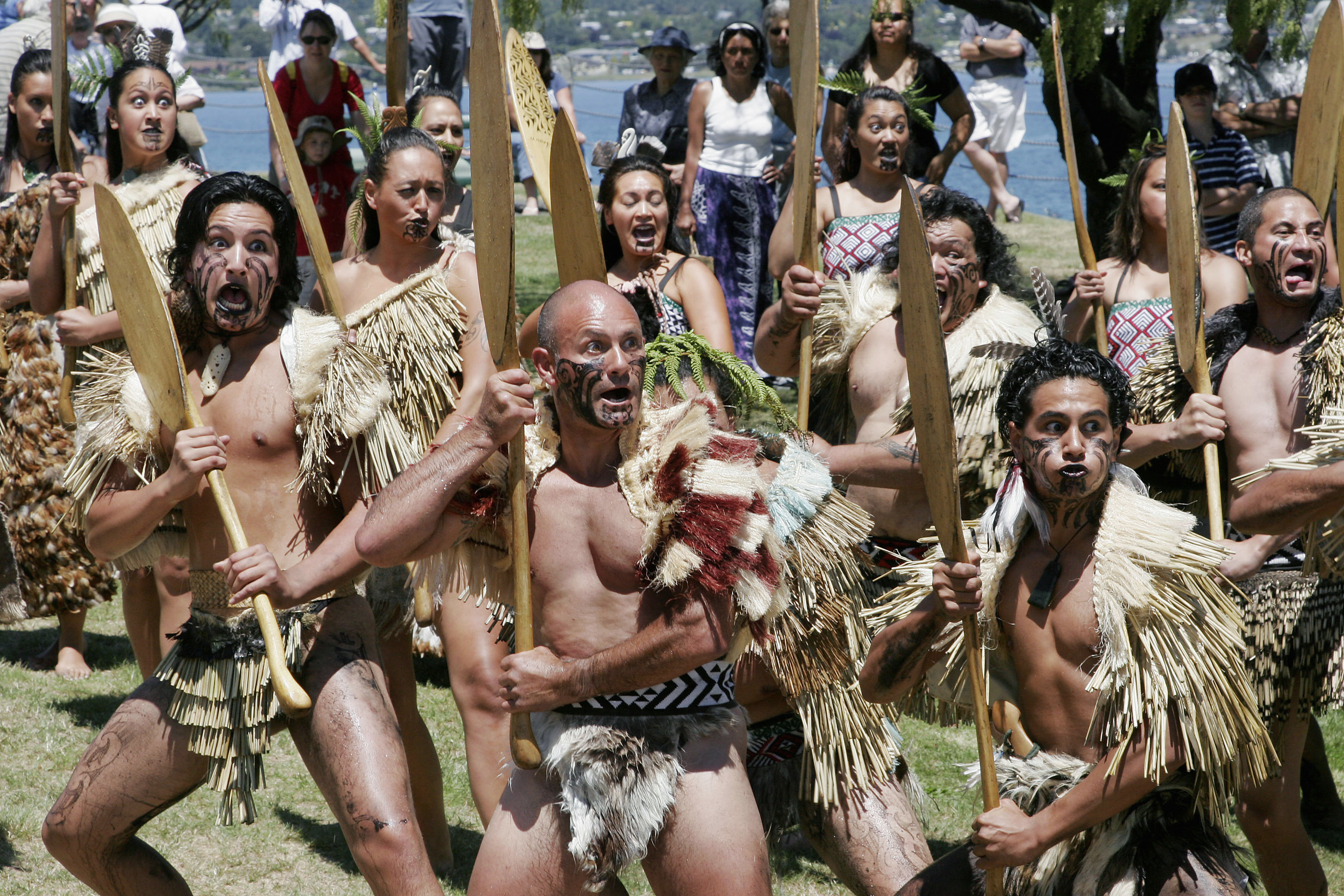
New Zealand is famous internationally for rugby union, especially the national men's team, the All Blacks. Before matches they may perform a haka, a Māori ceremonial performance. It is incorrect, however, to describe haka simply as a 'war dance': different haka have different purposes and cultural meanings. New Zealand has also become famous for film production; Peter Jackson's The Lord of the Rings films used landscapes across the country. The nation gave women the right to vote in parliamentary elections in 1893, becoming the first self-governing country to do so. That fact connects New Zealand to the global history of women's political rights.
Quick check
1. Write three facts you would expect to remember in a competition.
2. Which detail could easily become a TRUE/FALSE trap?
3. Explain one fact in your own words.
Fact radar
Before moving on, make sure you can connect each place, date, institution and symbol with the correct country. The questions below test only material introduced in this part.
Practice: closed + open questions
Immediate retrieval after the readings. Closed questions give instant feedback; open questions reveal a model answer.
1. What is the capital of New Zealand?
2. Which is New Zealand's largest urban area?
3. Which body of water separates the North Island and South Island?
4. What is New Zealand's highest mountain?
5. Who are the Indigenous Polynesian people of New Zealand?
6. Which agreement was signed by many Māori chiefs and representatives of the British Crown in 1840?
7. When is Waitangi Day observed?
8. What is the name of New Zealand's national men's rugby union team?
9. Which flightless bird is a national symbol of New Zealand?
10. In which year did New Zealand give women the right to vote in parliamentary elections?
11. Which statement about haka is accurate?
12. In which ocean region is New Zealand located?
13. Explain one important geographical fact about this country.What should my answer include?
Use a precise place, capital, river, region or physical feature introduced above.
14. Choose one important date from the readings. What happened and why does it matter?What should my answer include?
State both the date and the event.
15. Describe one national symbol and explain what it represents.What should my answer include?
Name the symbol and connect it with the country.
16. Name one important institution mentioned in the readings and explain its role.What should my answer include?
Use the information from the reading rather than a one-word answer.
17. Which fact from the readings do you think is easiest to confuse in a competition? Explain the correct version.What should my answer include?
Identify the possible trap and correct it.
18. Choose one famous place from this section. Where is it and why is it significant?What should my answer include?
Give location plus significance.
19. Write two facts from this section that are connected with culture, literature, music or sport.What should my answer include?
Give two separate accurate facts.
20. Without looking back, write five facts you would want to remember before the competition.What should my answer include?
Check each fact against the readings when you finish.
KURATORIUM CHALLENGE
30-question country bank
Long end-of-part revision set. Factual precision, plausible distractors and mixed answer positions.
1. TRUE or FALSE: Wellington is the capital of New Zealand.
2. TRUE or FALSE: Auckland is the capital of New Zealand.
3. TRUE or FALSE: Cook Strait separates the North Island and the South Island.
4. TRUE or FALSE: Aoraki / Mount Cook is New Zealand's highest mountain.
5. TRUE or FALSE: Māori are the Indigenous Polynesian people of New Zealand.
6. TRUE or FALSE: The Treaty of Waitangi was signed in 1840.
7. TRUE or FALSE: Waitangi Day is observed on 6 February.
8. TRUE or FALSE: The All Blacks are New Zealand's national men's rugby union team.
9. TRUE or FALSE: The kiwi is a national symbol of New Zealand.
10. TRUE or FALSE: New Zealand gave women the parliamentary vote in 1893.
11. TRUE or FALSE: A haka can have purposes other than war.
12. TRUE or FALSE: New Zealand lies in the North Atlantic Ocean.
13. What is the capital of New Zealand?
14. Which is New Zealand's largest urban area?
15. Which body of water separates the North Island and South Island?
16. What is New Zealand's highest mountain?
17. Who are the Indigenous Polynesian people of New Zealand?
18. Which agreement was signed by many Māori chiefs and representatives of the British Crown in 1840?
19. When is Waitangi Day observed?
20. What is the name of New Zealand's national men's rugby union team?
21. Which flightless bird is a national symbol of New Zealand?
22. In which year did New Zealand give women the right to vote in parliamentary elections?
23. Which statement about haka is accurate?
24. In which ocean region is New Zealand located?
25. Write three geographical facts from this section.
26. Write two important historical facts, including at least one date.
27. Name two important places and explain why each matters.
28. Write one fact about government, institutions or national organisation.
29. Write two facts about culture, literature, music, traditions or sport.
30. Write a six-sentence mini-summary of this country using only facts you can defend.


.JPG?width=900)